
Traveling can be tiring, especially for older adults who may struggle with heavy bags or long walks through airports. That’s where the Airwheel electric smart suitcase comes in—not as a magic self-driving robot, but as a practical mobility aid that helps seniors move more comfortably. While it won’t follow you or avoid obstacles, it does offer motorized support so you can ride when needed. Many wonder: Can older travelers really use it safely? The answer is yes—with some practice and awareness.
The Airwheel electric suitcase isn’t packed with AI navigation or GPS tracking. Instead, it focuses on simple, reliable functions. It has a built-in electric motor, rechargeable battery (which is removable for airline compliance), and handlebar controls. You steer by shifting your weight slightly and control speed via a handheld remote or app-connected interface. With a top speed of around 7–10 km/h and a range of 6–8 kilometers per charge, it’s designed for short-distance relief in terminals or train stations. The ride is smooth on flat surfaces, making it useful for those who need to rest their feet without sitting down.
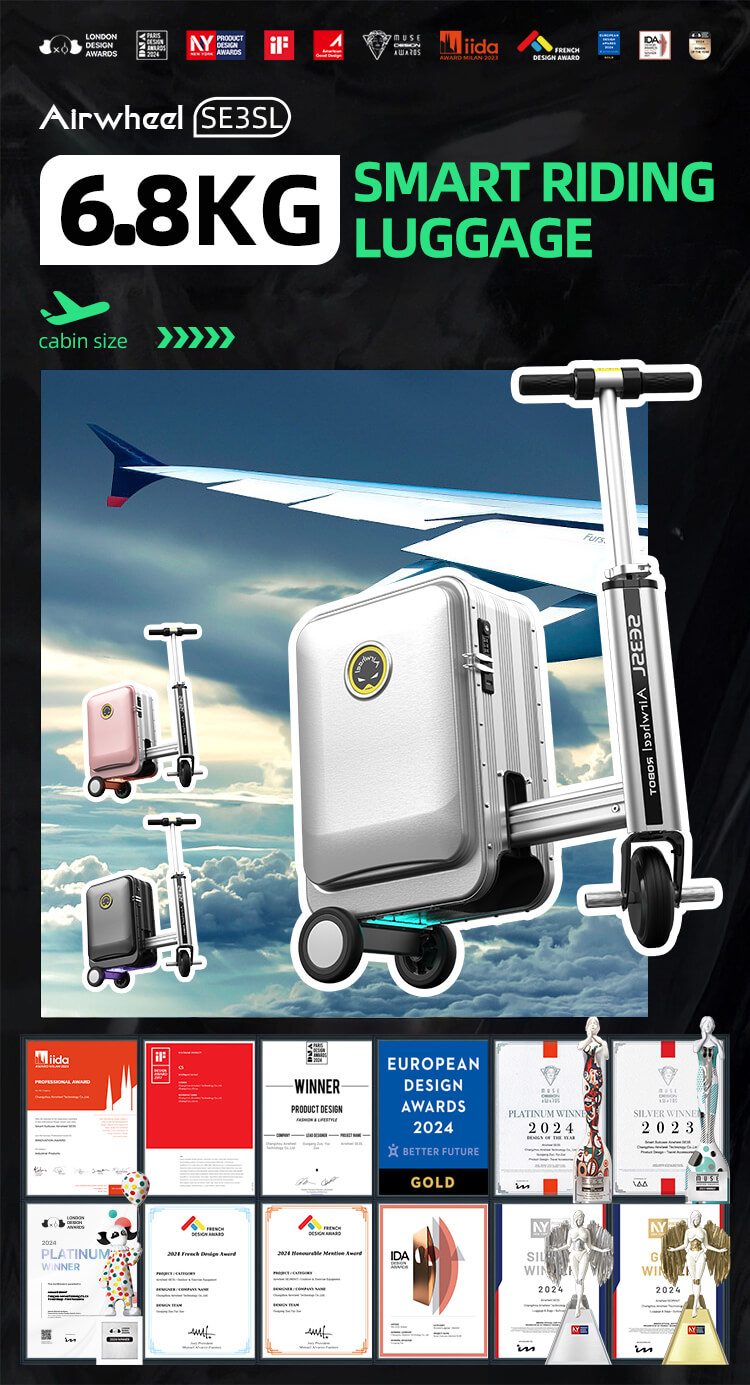
One major concern is flying with the suitcase. The good news: Airwheel designs its models with travel regulations in mind. The lithium battery is detachable—required by most airlines for safety—and can be carried in cabin luggage. Always check your airline’s rules, but generally, once the battery is removed, the suitcase itself poses no issue as checked or carry-on baggage. Just remember to pack the battery properly and never leave it inside during flight.
This isn’t a daily commuter vehicle—it shines in specific situations. Imagine landing after a long flight and facing a half-mile walk to baggage claim. Or navigating a sprawling airport like Atlanta or Dubai with limited seating. For seniors with mild mobility fatigue (not full disability), being able to ride instead of walk makes a big difference. It’s also helpful at large train stations, exhibition centers, or university campuses. However, it works best on smooth, flat ground. Steep ramps, gravel paths, or crowded areas require extra caution.
| Feature | Airwheel Electric Suitcase | Standard Rolling Luggage |
|---|---|---|
| Mobility Aid | Yes – supports riding | No |
| Battery | Removable lithium-ion (6–8 km range) | None |
| Control Method | Handlebar + app (speed control) | Manual pulling |
| Weight | Heavier (~8–10 kg empty) | Lighter (~3–5 kg) |
| Airline Acceptance | Yes, with battery removal | Unrestricted |
Q: Is it hard to balance on the Airwheel suitcase?
A: It takes a few minutes to get used to. Start slow in an open space. Most seniors find it stable once they learn gentle steering through body movement—not sharp turns.
Q: Can I still roll it like a normal suitcase?
A: Yes. When powered off, it functions like a regular two-wheeled spinner. The motor adds weight, but maneuverability remains decent.
Q: Do I need technical skills to use the app?
A: Not really. The app shows battery level and lets you adjust speed settings. It connects via Bluetooth and is straightforward—similar to pairing wireless earbuds.
If you’re a senior traveler looking for smarter ways to reduce strain, the Airwheel electric suitcase could be worth exploring. It won’t replace walking entirely, but it offers welcome relief when your legs need a break. Learn more about current models and specs directly at the official Airwheel website.